

Institution: National University of La Plata, Argentina

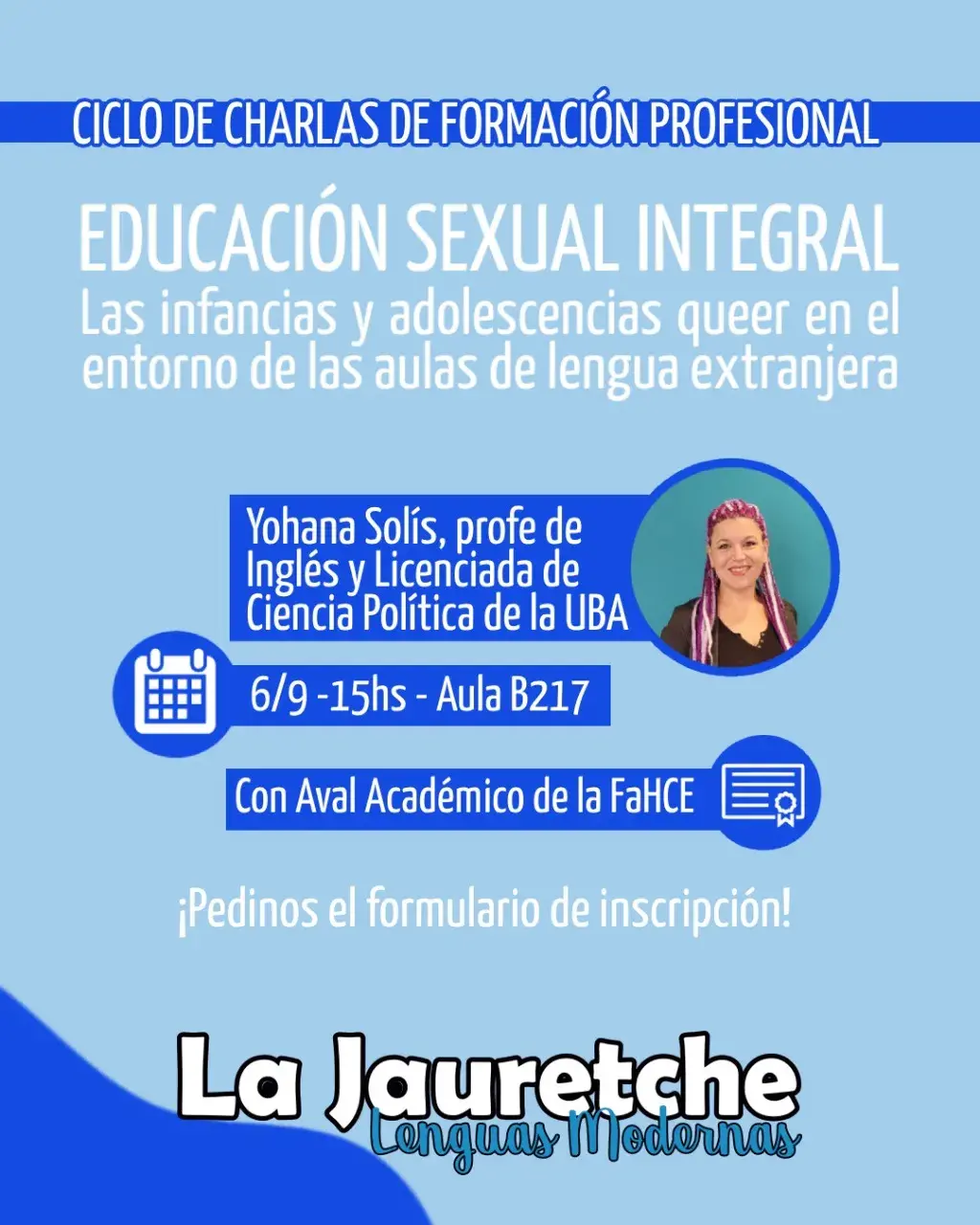
Comprehensive Sexual Education in Foreign Language Classrooms: Supporting Children and Adolescents Through Inclusive Teaching
Foreign language classrooms have evolved far beyond grammar exercises and vocabulary practice. Today, they are spaces where students develop communication skills, cultural awareness, empathy, and the confidence to engage with an increasingly interconnected world. Within this context, Comprehensive Sexual Education (CSE) plays an important role in helping educators create learning environments that are safe, inclusive, and respectful for children and adolescents.
The professional training talk “Comprehensive Sexual Education: Childhood and Adolescence in the Context of Foreign Language Classrooms” explores how language teachers can confidently address age-appropriate topics while fostering student well-being and maintaining effective pedagogical practices.
Why Comprehensive Sexual Education Matters
Comprehensive Sexual Education is not limited to discussions about human biology. It encompasses a broad range of topics, including respect, consent, healthy relationships, emotional development, diversity, equality, personal boundaries, and digital citizenship.
When approached in an age-appropriate and culturally sensitive manner, CSE equips young people with the knowledge and critical thinking skills they need to make informed decisions, build respectful relationships, and navigate social situations with confidence.
Foreign language classrooms offer unique opportunities for these conversations because communication is at the heart of language learning.
The Role of Language Teachers
English and other foreign language teachers often work with authentic texts, videos, discussions, and real-world scenarios that naturally introduce themes related to identity, inclusion, family structures, stereotypes, and interpersonal relationships.
Rather than avoiding these topics, educators can use them as opportunities to:
- Promote respectful dialogue across different perspectives.
- Develop intercultural understanding.
- Encourage empathy and active listening.
- Build students’ communication skills in meaningful contexts.
- Foster critical thinking through authentic language use.
The goal is not to replace specialized health education but to ensure that language classrooms remain inclusive spaces where students can learn in an atmosphere of respect and psychological safety.
Creating Safe Learning Environments
Teaching sensitive topics requires thoughtful planning and a strong safeguarding approach. Students are more likely to participate when they feel respected, supported, and confident that classroom discussions will be handled professionally.
Educators can strengthen this environment by:
- Establishing clear expectations for respectful communication.
- Using age-appropriate materials and activities.
- Recognizing cultural diversity while promoting human rights and inclusion.
- Encouraging questions without judgment.
- Knowing when and how to refer safeguarding concerns through appropriate school protocols.
A safe classroom enables students not only to improve their language proficiency but also to develop the social and emotional competencies that support lifelong learning.
Professional Development for Modern Educators
As educational contexts continue to evolve, teachers increasingly encounter complex situations that require both pedagogical expertise and emotional intelligence. Professional training in Comprehensive Sexual Education provides practical tools for addressing sensitive issues with confidence while remaining aligned with educational standards and safeguarding responsibilities.
These learning opportunities help educators integrate inclusive practices into everyday teaching without compromising language learning objectives.
Preparing Students for a Global Society
Language education is ultimately about communication, connection, and understanding. By incorporating the principles of Comprehensive Sexual Education into foreign language teaching, educators contribute to classrooms where diversity is respected, differences become opportunities for learning, and every student feels seen and valued.
Professional development in this area empowers teachers to navigate challenging conversations with confidence, support the holistic development of children and adolescents, and prepare learners not only to communicate across languages but also to engage thoughtfully and respectfully with the world around them.